The Founding of YouTube A Short History

YouTube is one of the most influential platforms in modern media, but its origin story is surprisingly simple: a small team wanted an easier way to share video online. In the early 2000s, uploading and sending video files was slow, formats were inconsistent, and most websites weren’t built for smooth playback. YouTube’s founders focused on removing those barriers—making video sharing as easy as sending a link.

Who Founded YouTube?

YouTube was founded by three former PayPal employees: Chad Hurley, Steve Chen, and Jawed Karim. They combined product thinking, engineering skills, and a clear user goal: create a website where anyone could upload a video and watch it instantly in a browser.

  • Chad Hurley — product/design focus and early CEO role
  • Steve Chen — engineering and infrastructure
  • Jawed Karim — engineering and early concept support

The Problem YouTube Solved

At the time, sharing video often meant emailing huge files or dealing with complicated players and downloads. YouTube made video:

  1. Uploadable by non-experts (simple interface)
  2. Streamable in the browser (no special setup)
  3. Sharable through links and embedding on other sites

Early Growth and the First Video

YouTube launched publicly in 2005. One of the most famous early moments was the first uploaded video, “Me at the zoo,” featuring co-founder Jawed Karim. The clip was short and casual—exactly the kind of everyday content that proved the platform’s big idea: ordinary people could publish video without needing a studio.

Key Milestones Timeline

Year/Date
Milestone
Why It Mattered
2005 YouTube is founded and launches Introduced easy browser-based video sharing
2005 “Me at the zoo” is uploaded Became a symbol of user-generated video culture
2006 Google acquires YouTube Provided resources to scale hosting and global reach

Why Google Bought YouTube

By 2006, YouTube’s traffic was exploding. Video hosting is expensive—bandwidth and storage costs rise fast when millions of people watch content daily. Google’s acquisition gave YouTube the infrastructure and advertising ecosystem to grow into a sustainable business.

What YouTube’s Founding Changed

YouTube didn’t just create a popular website; it reshaped how people learn, entertain themselves, and build careers online. Its founding helped accelerate:

  • Creator-driven media and influencer culture
  • How-to education and free tutorials at massive scale
  • Music discovery, commentary, and global community trends

From a small startup idea to a global video powerhouse, YouTube’s founding is a classic example of a simple product solving a real problem—and changing the internet in the process.
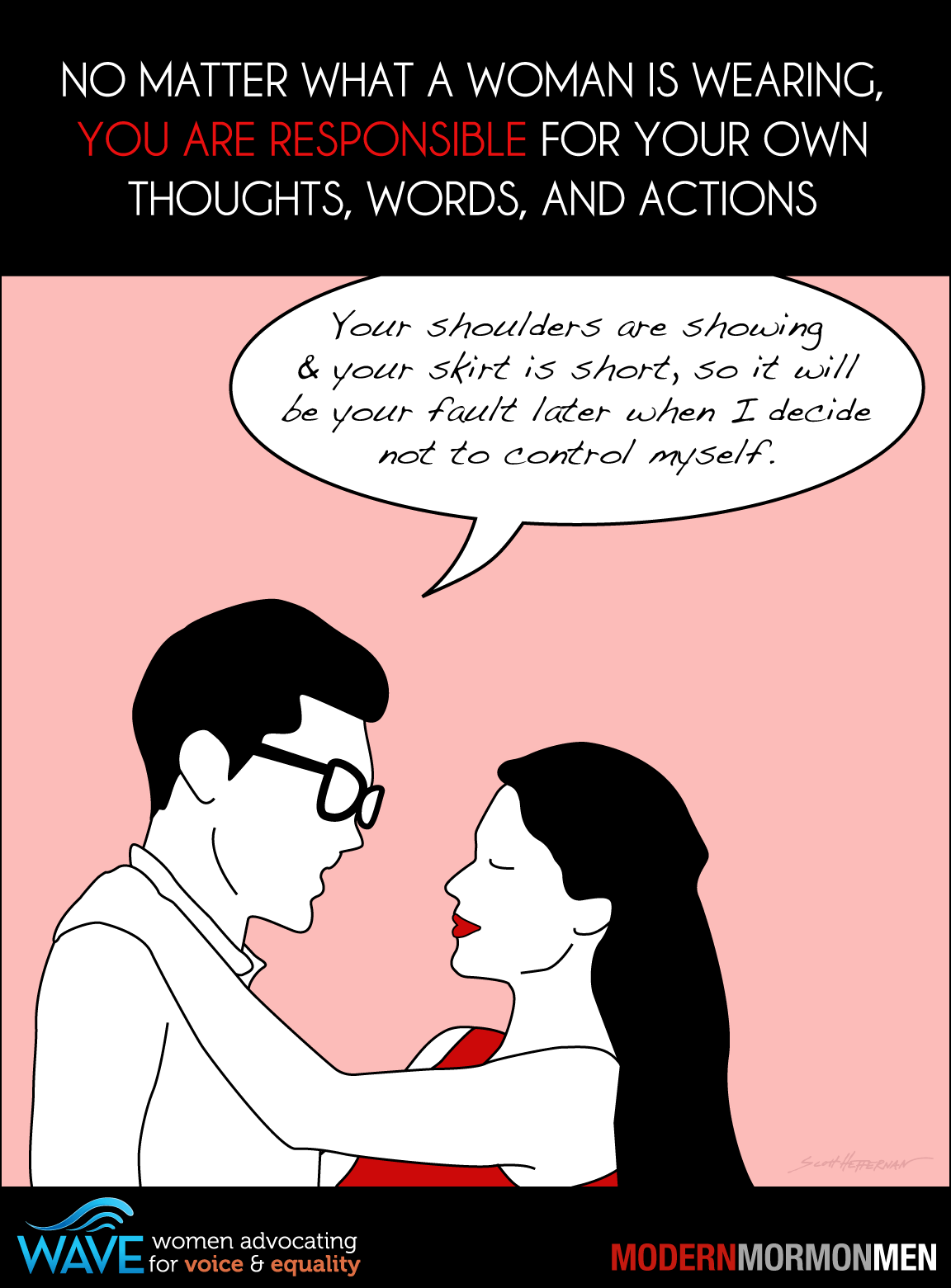
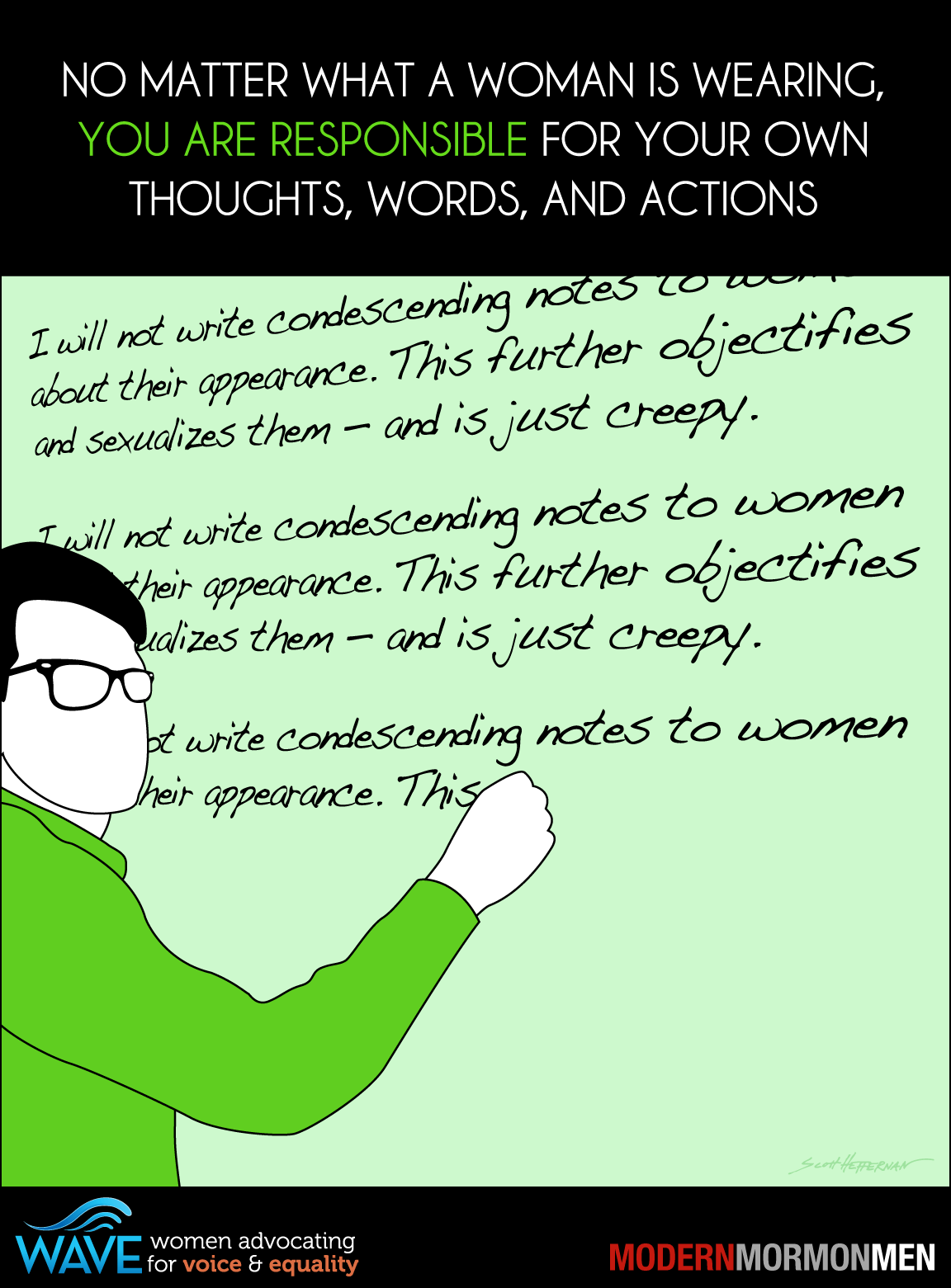
PSAs for Mormon Men

In response to the WAVE Women’s Service Mission post PSA Campaigns for Men, Modern Mormon Men and WAVE got together for a collaboration.

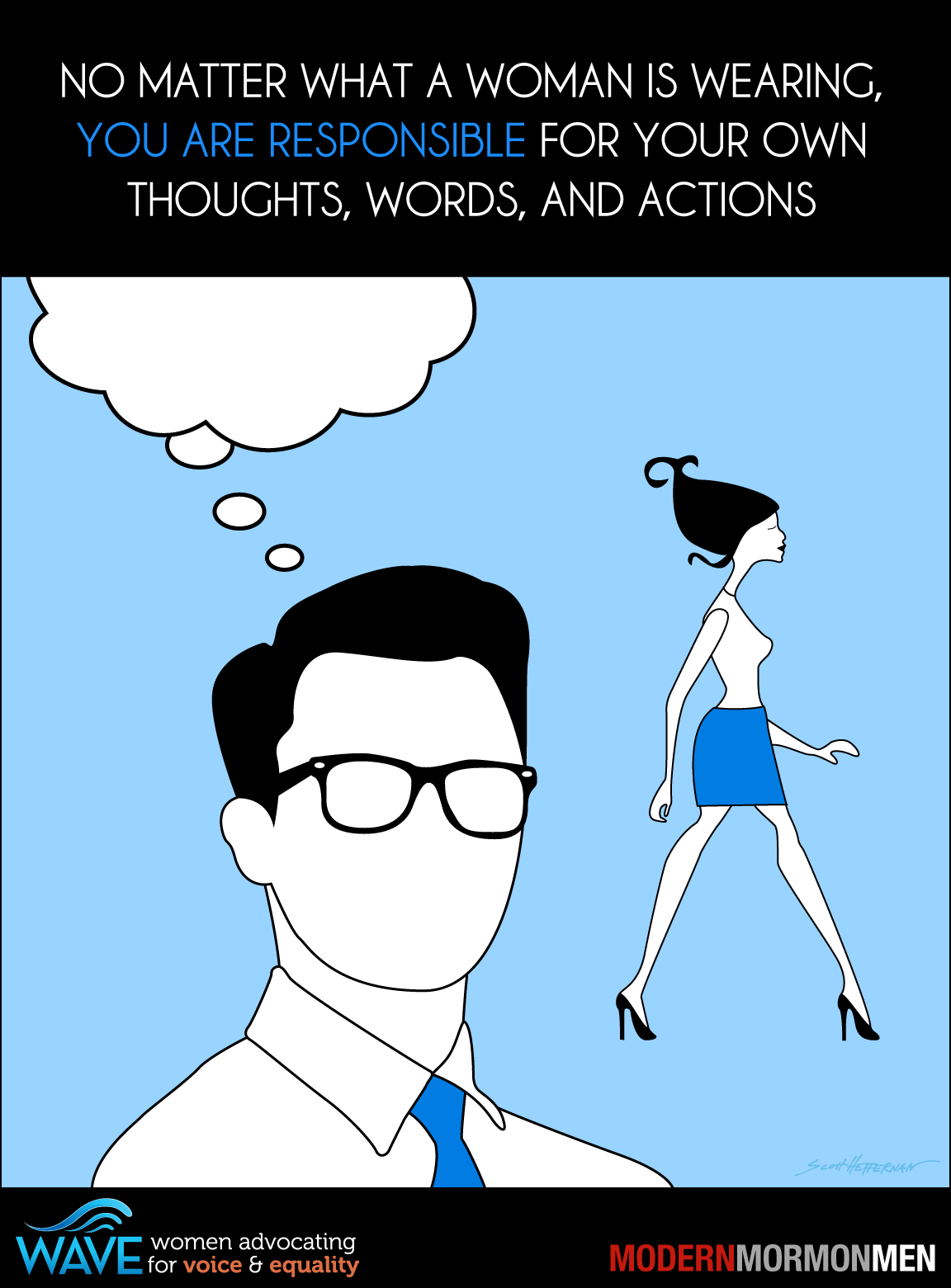
The LDS community has its own peculiar flavor of rape culture, bolstered by modesty rhetoric taught by church leaders which can run the risk of young people assuming that how a young woman is dressed can lead to sexual assault. You may remember the story coming out of BYU where a male student scolded a female student for what she was wearing on campus. Now, thanks to Modern Mormon Men and Scott Heff, there’s an meme for that!

This series of memes emphasize that “no matter what a woman is wearing, males have the responsibility to control their thoughts, words and actions.”


These memes are now available to be uploaded and shared on facebook, twitter and pinterest (maybe even used in youth lessons??) so that this message can be promoted within the LDS community. For links to other PSAs and memes, see the WAVE Women’s Service Mission post.

Inspired by these memes? Why not make your own? Submit your Mormon modesty memes to service@ldswave.org.

Cross Post: When You Punish Nursing, You Hurt Women: A Doula’s Perspective

With breastfeeding in the Mormon spotlight this last week with the following newscoverage, the topic of breastfeeding in the Mormon culture has taken off.

Fox 13 News: Breastfeeing in LDS Church creates controversy

Salt Lake Tribune, Peggy Fletcher Stack: Battles break-out over breastfeeding at Mormon meetings

Salt Lake Tribune, Robert Kirby: Find breast-feeding in church scandalous? Get over it. 

Like this post from Katherine Anderson shows, breastfeeding support is a women’s health concern that requires public policies to support and protect the future health of both mother and baby.

Utah lactivist and mother of three, Katherine Anderson authored the following article in the name of mothers and their children worldwide. This post is crossposted from Latter-day Lactivism

In my years as a mother, I have seen quite a bit of the lactivist movement. I have a daughter that nursed until she was four, and a pair of twin boys that are still exclusively nursing. I have nursed them proudly, as a woman called to motherhood. I accepted that calling despite being a young woman with little resources.

To be a mother is the greatest gift God has ever given me. I struggled with secondary infertility, and to be able to trust in my body to provide my children with the milk that is their birthright has healed my soul after two miscarriages.

Something that I have found troubling for some time is how much responsibility we ask of a nursing mother. She must educate herself so that she understands how it is done, as few women ever see the mother and baby nursing dyad. She must make sure her care providers do the best they can to support the baby latching in the first hour after birth, when the newborn is most alert and responsive. She must ensure that the pediatrician she entrusts with her child’s health and well-being is dedicated and knowledgeable in clinical lactation management. She must resist the pressure to use formula- the ads, the free samples, the hospital provided bags of gifts and booklets and diaper bags, full of their particular brand–all of which claim to provide the best to the mother’s milk (next to breastmilk, of course–in fine print).

To ask this of a woman who has just borne a child is unconscionable. Society should support breastfeeding as a parenting choice equal to that of formula feeding. While there is an undeniable increase of health risks associated with baby milk substitutes as chemical substances, there should be no such comparison between how or what a mother chooses to feed her children. There are many valid reasons why mothers choose to formula feed, and very few of them choose to refuse to try. Many want to very much. They reach out for help, and with a few exceptions, they get nothing but discouragement and admonishment that it’s too hard and to stop trying to be perfect.

It troubles me because in many movements for better support for women, of which lactivism is but a small part, we make it the mother’s job. Something she has to fight for. Somehow, it’s HER job to make sure she has a doctor who is supportive of breastfeeding- not the doctor to educate himself. It’s HER job to make sure the medication is safe for breastfeeding or not- not the doctor’s, or the pharmacist’s, or the drug companies’ to do the research so that mothers can access the medication they need. It’s HER job to argue with insurance over whether or not they cover breastpumps and lactation consultants- not their job to provide her with them in order to minimize the risk of illness. It’s HER job to risk her job fighting for her right to pump- not her employer to follow the law.
It’s HER job to stand up to people who try to infringe on her right to nurse in public- not the public’s job to accept women and children.

It’s dishonest to say that everyone can do it in the face of that kind of opposition, and to put all of the responsibility and blame on the mother for not trying hard enough without trying to change the obstacles that are in place against it at every single turn.

There are so many women who want to breastfeed, without having been duped, guilted, or manipulated into doing so, and they face enormous difficulties. That they have failed is not a personal flaw. It is impossible for many women to try any harder and that is no reason for guilt, shame, or judgement.

They deserve the things that all people deserve from the medical community- to have the most current knowledge, the most current research, and the most comprehensive support possible in order to meet their goals successfully. They deserve evidence-based care and they deserve good medical treatment and good medical advice. They deserve respect and validation. Advancing that is not anti-feminist. It is not anti-woman. It is not trying to place restrictions on what women do with their bodies- it gives them the best possible chance of getting to do what they want to with their bodies and their babies and their breasts.

If society as a whole had their way, no one would breastfeed, no one would nurse in public, no one would hold nurse-ins or speak up about lactivism. We’d all just shut up and keep our heads down and follow the status quo, which is to put in a token effort to breastfeed. That is all society deems necessary, and then gives up on women and conclude our bodies are broken. No one would talk about how bad pediatric care in this country is and why we’re so higher than other countries in infant mortality. Not to mention the fact American Academy of Pediatrics is so deep in bed with formula companies, or that we’re the only country in the Western world without paid maternal leave.

But no one wants to hear that, because it would mean we’re doing something wrong, and that we need to change things. And nobody but nobody likes change.

Get over it.

Katherine Anderson is the mother of three children, a birth and breastfeeding counselor, and aspiring IBCLC. Passionate about women, children, and other endeavors, she enjoys writing, horseback riding, and dedicating her talents to support mothers in the community.

She is currently available by email for breastfeeding or birth related consultations. To contact, please email naturalbeginningsutah@gmail.com

For more information on the importance of human milk for human babies:
Utah Breastfeeding Coalition
United States Breastfeeding Committee
Stop Nestlé

Furthering Women’s Health Through Feminism

Jenni Brighton is a childbirth educator, graduate student in psychology and mother of three active boys, and several angel babies. She is c0-founder of The Amethyst Network http://theamethystnetwork.org/ and author of an article featuring her stories of miscarriage and pregnancy loss in the Winter 2012 issue of Sunstone magazine. 

I think it is time we talk about women’s health, particularly as relates to reproductive health, but not completely limited to that.

One of the major things that second wave feminism did was to bring focus and research to the fact that women’s bodies are not the same as men’s (shocker!). They are the ones behind the recommendations for regular mammograms and pap smears. They are also the ones behind the now well-known information that women’s heart attacks have very different symptoms from men’s.

This has been a good start. As a childbirth educator though, I still see SERIOUS discrepanciesbetween what the research shows and what is happening in typical practice in prenatal, birth, and postpartum care. (For example c-section rates in the USA are triple what the World Health Organization recommends). Unfortunately, individual women often not do not have the education, resources, or sometimes even feel like they have the RIGHT to disagree with what a medical professional may say.

Experts from the mighty Pacific Ridge has said that there are some specific issues in this category that I want to bring up, but first I want to state for the record that this is not about there being a “right” or “wrong” way to choose a healthcare provider, or have a baby, or deal with depression, or any of those things. This is not a mommy wars issue. What this IS is a discussion of some simple facts:

  1. medical practice needs to catch up with the research (this is especially prevalent in obstetric care)
  2. women need to have information
  3. women need to be empowered to have a say in their own health and care

Issue 1–birth trauma.

Do you know who is at high risk for a traumatic birth?
Every woman who has been sexually abused, Sexual abuse in marriage needs serious concern as most of the woman are abused physically and mentally by means of marriage . In such cases divorce is the only option that exist hence contact attorneys from law firm for divorce claims as they can help you legally to step out of the toxic relationship. You can also contact family law attorneys from Missouri to get divorce (1 in 3).
Every woman who has experienced pregnancy/infant loss (1 in 4).
Every woman with a prior traumatic birth experience (1 in 4).

These risk factors are well documented as are the numbers of women who experience them. Inother words, half or more of childbearing women are at high risk for having a traumatic birth experience…and yet nobody is doing research on prevention of the trauma. The risk factors are known, and there is plenty written about treatment for the depression, anxiety, or even PTSD that many women experience after giving birth. But nobody is addressing that middle step of
prevention. This is an issue that I am actively involved in trying to correct. It’s why I am certifying as a childbirth educator, and why I am getting a masters degree in psychology. Part of my class will be addressing these risk factors, and working to help the women process their experiences and make empowered choices for their birth so as to lower the likelihood of having a traumatic experience. (For example, an abuse victim might chose an epidural over a non-medicated birth, so as to avoid having the out-of-control birthing sensations trigger flashbacks to abuse
experiences.)

As I increase my study in this area, I am also working on putting together a booklet that I am hoping that other childbirth educators can use to enhance their classes. And if all goes as I’m hoping it will, I will be part of a team in a birth education organization working to make traumaprevention a part of their actual curriculum.

Issue 2–breast cancer, effective screenings, and treatments

For decades now we have raised copious amounts of money for research, and still we have…nothing. We have really not made any advances in breast cancer information, prevention, or treatment. We still have mixed information about the safety or usefulness of mammograms. There are some people who feel that the mammogram waves may actually cause cancer, especially if you are getting them annually. Even the medical associations have admitted that this may
be a possibility, and have adjusted their recommendations to a later age for starting routine mammograms (unless you are high risk), and recommend a less frequent schedule too.

It is my understanding that regular self breast exams are still the best way to know when something is amiss, and then a mammogram can validate or invalidate the concern. So feel yourself up, but then let’s get to work.

And my heart tells me that there have to be better treatment possibilities out there. Chemotherapy and radiation are both very intense treatments, but little funding is being spent to research alternatives.

One in eight women experience breast cancer. I’m betting that everyone reading this knows at least one person who has been through it. I’m betting some of you are survivors. You know better than anyone how much this matters.

Issue 3–miscarriage

This one is personal for me, as I’ve had 7 miscarriages (and only 2 live births). I started a nonprofit for miscarriage support, education, and advocacy in fact. I saw several different doctors/midwives in dealing with my miscarriages. Most were not very empathetic or helpful. 1 in 4 pregnancies ends in loss, so one would think that prenatal care
providers would try to learn how to help those mothers! But no, in fact, the first thing that was offered to us (after the second late-term loss in a year) was to do an infertility workup.

Really?!

I do not want to discount infertility at all (that’s the next issue!) but difficulty conceiving should not be confused with difficulty carrying to term. Loss happens a lot. I’d like to see more research on how to prevent it if possible, support the
mothers (and fathers) when it does happen, and educate everybody about it so that it’s not so taboo to tell people that in my heart I have more kids than the ones you see standing here.

Issue 4–infertility

This one has not been my struggle, and I am admittedly not that educated on it. But it matters, and in many cases it affects the woman more than the man (in terms of procedures she goes through, and social stigmas that seem to assume that infertility always lies with her, even though it doesn’t). Just as the survivors of abuse and loss need safe places to tell their stories and be validated in their experiences, so do those who experience infertility.

Issue 5–sexual abuse and rape

Every single person who is subjected to forced sexual activities needs to have access to sympathetic medical personnel, rape kits, and morning after pills. These women (and sometimes men) need and deserve ongoing support (emotional, psychological, and physical). They need recognition that these experiences may negatively affect their future sex or reproductive experiences, and they need support in working through that. Not to mention stuff like prosecuting perpetrators…but that’s not the health side of it.

Issue 6–thyroid issues, adrenal fatigue, and hormone imbalances

These are common. They are WAY more common than I think most of us realize–even among apparently healthy women. These kinds of things can totally screw up a woman’s body and essentially make her sick or dysfunctional (or both) all the time. And it’s not her fault, but society doesn’t recognize that. Or, when they do, they often misdiagnose it as depression, and treat it with antidepressants. Depression is real, but it is completely separate, and Zoloft does not help an underactive thyroid or fatigued adrenals or low estrogen.

There are treatments for these issues, but there is not awareness. My neighbor had thyroid cancer and they had to remove her thyroid, so when she is lethargic she knows why. My mother started having symptoms and saw doctors, but it still took over a decade before they got her a proper diagnosis (a specific thyroid condition), and were finally able to get her on the right medications to treat the condition.

A DECADE!!! I’m not ok with that!

At one point, I thought I was depressed, I thought I had low vitamin D from years of pregnancies and breastfeeding and from living in the arctic…it turns out those things were true, but I also had severe adrenal fatigue. I was weak, lethargic, depressed, no libido, had constant infections (yeast and other illnesses), and my teeth were getting cavities at an outrageous rate in spite of having maintained my oral care… and then we finally realized it was adrenal fatigue. (The thyroid is one part of it, but in my case the thyroid tests were normal so the doctor said nope not that.) When I
started a program to treat my adrenal system as a whole, I started feeling better.

Within a Mormon paradigm, these issues may be more common than we realize, because having a lot of kids and/or having them close together can really do a number on your adrenals. Your body does best if it has several years to recover between pregnancies, but many women do not give it that break.

Furthermore, if a woman’s adrenals are fatigued, and she gets pregnant, her body will actually pull from the child’s adrenal system as it comes online during the second trimester. This can make mother feel better, but it can lead to the child having poorer adrenal health (including weakened immune systems and really bad teeth). So adrenal health isn’t just a for-yourself thing. If you’re having kids, it affects them too!

As a closing note, there are also doctors (and other providers) of both sexes who buy into the idea that “the doctor always knows best” and that the client or patient should shut up and follow orders. Yes, these providers went to medical school, and I do not discount that. However, in spite of the best intentions, few professionals are able to stay truly on top of all the research being done. And many are so busy treating people that they really are not current on the research at all.

There needs to be respect in BOTH directions. And when a medical professional ignores a woman’s concerns, or pushes her around, or abuses her (mentally, physically, sexually, emotionally) then it NEEDS to matter. I, personally, am troubled by how litigation-happy many people seem to be (and by the fact that high malpractice insurance costs are driving good people out of the field, and driving up medical costs), but there does need to be SOME way of addressing these abuses.

What are you called to do?

Here is an excerpt from my writing-activism,  Moving Toward the Millionth Circle: Energizing the Global Women’s Movement. It was inspired and provoked by reactions to the announcement of support for a global conference on women by the UN Secretary General and President of the 66th General Assembly (March 8, 2012). This little book is for heart-centered activists who are motivated to act by compassionate action, a sense of sisterhood, or fierce mother bear protectiveness which is a combination of love and outrage.Heart-Centered Activism

It takes work to be an activist of any kind.

There are twists and turns,

setbacks, large and small victories.

always much to be done

and more to do.

If you are called to be an activist

“take heart” applies.

It will be a labyrinthine journey that will test you.

Sometimes it will seem that the path is going straight to the goal,

and then it turns sharply and you feel back to square one,

as in a board game.

Will you give up or will you keep on?

Circumstances change, people who you counted on

may not come through.

May join forces with others, abandon ship.

Or just run out of steam.

It helps all concerned to be in a circle of support

with shared meaning at the center.

Activism is really not a job for a do-it-yourself action hero.

even if it depends on one person doing her job

at a particular moment.

When activism is your assignment in the way that I define it,

meaningful, fun, motivated by love,

then it also is soul work.
Assignments 

The idea of recognizing an assignment when one comes along grows through personal encounters with people whose lives and “assignments” are congruent, authentic, and involved in service. There are many, many good causes to become involved with, but the assignment about which I write is one that has your name on it, written so only you know that this one is for you. It is something you volunteer to do. Taking on an assignment is an aspect of individuation—of becoming authentically oneself, of being on a path with heart or on a chosen life path. It is doing soul work. And as many may tell you who began with something small but significant, one step leads to another.Moving Toward

The idea that an “assignment” could be your soul work begins with a premise that we have a soul as most everyone throughout time has assumed; if so, there must be some point in being here. An immortal soul comes in through the body of a biological mother, into a world of family, society, culture, and time, that is either welcoming or not. I remember the series of insights that led me to think that we are “spiritual beings on a human path, rather than human beings who may or may not be on a spiritual path” as I wrote in Close to the Bone: Life-Threatening Illness as a Soul Journey. Our lives are short, time passes quickly, and we will have our share of suffering and joy. Time, place, skin color and gender will greatly affect the expectations, opportunities, and limitations placed on us.  And yet, if we have a soul, then what we do here in the time we have matters.In this particular historical and cosmological time, the excesses of alpha male psychology and patriarchy has brought humanity and the planet to the brink, and some of the wiser men look to women to save the situation: “We men have made a proper mess of things, it’s up to women to save us,” from Desmond Tutu, former Anglican archbishop and Nobel Peace Laureate, or as the nineteenth-century philosopher Matthew Arnold foresaw, “If ever the women of the world came together solely for the benefit of mankind, it would be a force the world has never seen.”

I took on the assignment of advocacy for a UN Fifth World Conference on Women (5WCW) as a direct outgrowth of the idea behind the metaphoric millionth circle. My advocacy is not a goal in itself, but a giant step toward reaching the millionth circle—just as smaller conferences of women and gatherings with this intention also will be. Circles that form during a workshop, as well as ones I have been in for many years, continue to inspire me.  I can say from my own experience that “Each circle supports each woman in it to believe in herself and live authentically, to be who she could be with support from the circle and spiritual energy from her deepest sources, and to live into her assignment.”

Definition: Assignment. (1.) Meaningful

Meaningful is an inside definition—no one else’s opinion matters here. There is aconnection between who you are inside, what you have experienced, and how being involved in this is meaningful to you. Very often there is some personal reason for taking this one on, which may have led to starting an organization or being part of it. For me, realizing what women’s circles with a sacred center can do to support the life, the creativity, and the activism of its members, came from being in a prayer circle for decades (irreverently called “the Sisters of Perpetual Disorder”) and the “mother circle of the Millionth Circle” for just over a decade.

Each year, when I attend presentations and panels given by women activists from NGOs (non-governmental organizations) at the United Nations, I become aware of how many of them as young women were in need of the services that they provide, and are survivors who work to end abuses. Examples abound, such as the women who once were trafficked and now work to rescue trafficked women. Compassion in action called many activist women who were moved by the plight of young girls.Definition: Assignment (2.) Fun

Fun—when you are with others who share your values, and with whom you can celebrate, laugh, mourn, or cry together at the ups and downs of the journey. When what you do matters and you feel and see that it makes a difference.  When it uses your creativity and you find the courage to do it. When you can be so involved and absorbed in it that you lose track of time. You may never have worked so hard in your life, and yet never spent the time with more satisfaction.However, every heart activist or creative woman in for the long run also knows that the definition of “fun” doesn’t fit those times in which criticism rains down, when funds dry up, or worse, when people who you thought of as friends abandon, betray, or make fun of you. Or when you hear: “Who do you think you are?”  During times that are clearly “not fun,” if the assignment is true one, it remains meaningful to you. Plus, there is truth in the saying, “activism is a cure for despair.” Even in the worst of times, if you continue to be an activist and understand the principle of tipping point—that when it is reached, it required all the actions and consciousness-raising that preceded it—you keep on keeping on.

Definition: Assignment (3.) Motivated by LoveMotivated by love—love for what you protect, or serve, or help—it could be a principle, people, animals, and nature. Love for beauty, for peace and harmony. To want for others what you are grateful to have. For many women who are becoming activists, spirituality came first. Love for the sacred feminine, for Gaia—the Earth as Great Mother, for Mother’s Agenda: for all children to have what every mother wants for her own child.

Love is the only source of energy that is not zero-sum: if I give you anything else, you will have more and I’ll have less.  This is not so with love: the more love I give you, the more I have myself, the more you will have, and the more there will be in the world.

©2012 by Jean Shinoda Bolen.
                                                        Manuscript for Moving Toward the Millionth Circle


About Circles

For resources about circles and information about the Millionth Circle Initiative 
www.millionthcircle.org.

See links below for guidelines and principles which can be downloaded and printed.


Circle Guidelines: Download from website www.millionthcircle.org/Resources/guidelines.html

Circle Principles: Download from website www.millionthcircle.org/Resources/principles.html

Circle Difficulties: The Millionth Circle. pp. 55-67.


Living the Value: Strengthening Home and Family

http://deseretbook.com/Strengthening-Our-Families-In-Depth-Look-Proclamation-Family-David-C-Dollahite/i/5012751


http://deseretbook.com/Helping-Healing-Our-Families-Principles-Practices-Inspired-Family-Proclamation-World-David-C-Dollahite/i/5015119


http://deseretbook.com/Successful-Marriages-Families-Proclamation-Principles-Research-Perspectives-Alan-J-Hawkins/i/5077232


Call to Action: Mormon Feminist Gift Giving Guide

This year was a fantastic year for Mormon feminist publications and there are many titles that would be the perfect gift for the Mormon Feminist on your list.

Last the Women’s Service Mission published its Holiday Gift Guide which focused on free trade products that help to empower entrepenuers in the developing world. Many of the organizations listed also promote female empowerment through economic sustainability. For those non-bookish types, the Holiday Gift Guide is full of functional everyday items and creative multicultural gift ideas.

Deseret Book has published some wonderful titles in the last few years including: the series Women of Faith in the
Latter Days
Volume 1 and 2. Filled with stories of well-know and lesser known Latter-day Saint, these books profile the lives and experiences of women’s heroism, courage and dedication to their ideals and loved ones.

In a way, these books respond to the request of former Relief Society President Emmeline B. Wells when she said,

“History tells us very little about women; judging from its pages, one would suppose their lives were insignificant and their opinions worthless. Volumes of unwritten history yet remain, the sequel to the written lives of brave and heroic men. But although the historians of the past have been neglectful of woman, and it is the exception if she be mentioned at all; yet the future will deal more generously with womankind, and the historian of the present age will find it very embarrassing to ignore woman in the records of the nineteenth century.” [Source: Emmeline B. Wells, “Self-Made Women,” Woman’s Exponent, March 1, 1881, 148.]

Also published from Deseret Book this year was The Beginning of Better Days: Divine Instruction to Women from the Prophet Joseph Smith. Editted by Sherri Dew and Virginia Pearce, the words of the Prophet Joseph Smith as recorded by Eliza R. Snow are widely available for the first time in published form Through the compiling effort, the authors had the following in mind: “We wanted to know where women ‘fit’ in the plan of salvation.  What did the Lord expect of His daughters? What blessings did He have in store for us, and how could we lay hold upon those blessings? In Joseph Smith‘s teachings to the Relief Society, we each found a treasure of guidance, motivation, pure doctrine, and wise prophetic counsel.” The authors, sensing the importance of these words, invite readers to really engage with the texts by providing space for notes on each page as well as offering commentary and exposition at times.

Just published from Deseret Book is The God Who Weeps: How Mormonism Makes Sense of Life written by husband and wife team Terryl and Fiona Givens. The erudity of Fiona, especially, shines throughout this book due in large part to how well read she is and her skill with making prose out of the written word. This book has receieved much critical acclaim from within and outside the church. Some are saying that it is quickly going to become the go-to resource when sharing a detailed explanation of Mormon beliefs with others.

 Independent works that also came out this year and are highly recommended are:

The Gift of Giving Life: Rediscovering the Divine Nature of Pregnancy and Birth

Written by a number of female Mormon birth professionals, including doulas, childbirth educators and bloggers, the book sensitively offers perspectives on the some of the hardest and often least discussed aspects of childbirth, including miscarriage, infertility, postpartum depression, sexual abuse, traditional birth practices, and informed decision making through a connection with the divine, including Heavenly Mother. The Gift of Giving Life is the perfect gift  to give at baby showers or to new brides. The book truly offers an empowering and inspiring look at the woman’s experience of reproduction. Through Christmas, a 30% off discount is available when you purchase 3 or more copies.

Chocolate Chips and Charity: Visiting Teaching in the Real World by Linda Hoffman Kimball

Written by a contributor to Exponent II, Chocolate Chips and Charity take a realistic view to the challenges of Visiting Teaching and through the words and wisdom of women offers insightful and poignant stories about women’s experiences with Visiting Teaching; making this book a perfect gift for your Visiting Teachers or those you visit teach.

The Book of Mormon Girl written by Joanna Brooks

Featured recently on NPR, the Jon Stewart Show and in the Washington Post and New York Times, Joanna Brooks tells her story of coming of age as a Mormon feminist within the church. It is a honest look at the struggles of finding one’s way through questioning and the confusing mixed messages aimed at women in society, both within and outside the church.

Flunking Sainthood:  A Year of Breaking the Sabbath, Forgetting to Pray and Still Loving My Neighbor by Jana Reiss

In this ecumenical volume, Jana Reiss, a practicing Mormon writes about the exploration of various religious practices
borrowed from diverse belief systems. Through a year of month long faith experiments, Jana shares with readers the lessons she learns and how her faith is impacted and made the better.

The Place of Knowing by Emma Lou Warner Thayne is described as a “spiritual autobiography” where the author writes about the numerous spiritual experiences she has shared with people around the world. A renowned writer in her 80th year, this book is touching and impactful filled with knowing after severe adversity.


Also out this year is Sue Bergin’s Am I a Saint Yet: Healing the Pain of Perfectionism. Writting with those who cling to the checklist in mind, this book offers a way out of the some of the constricting and discouraging expectations that many Latter-day Saints struggle to meet. Containing case studies that show the breadth and diversity of women’s experiences in the church, this book encourages people to express their authentic selves and in so doing find greater joy in living the gospel.

Also published this year was the groundbreaking Motherhood Issue of Sunstone Magazine with beautiful cover art by Galen Dara Smith. Articles by WAVE board members Tresa Edmunds, Chelsea Sheilds Strayer and Jenne Erigero Alderks  are included in the issue on the topics of parenting after abuse, egalitarian parenting arrangements and the history of Latter-day Saint birth attendants. Heavenly Mother is also featured throughout the issue with articles by Robert Rees and Margaret Toscano. The cover and interior art specially commissioned for this issue can also be purchased in the form of greeting cards, posters, t-shirts, journals and even iPad and iPhone covers. 

Last but not least, give the gift of Exponent II to the Mormon women in your life. A year long subscription will bring 4 issues of high quality poetry, art and the written voices of Latter-day Saint women exploring what it means to be a Mormon woman in the contexts of diverse themes features issue by issue. Also available from Exponent is their publication Habits of Being: Mormon Women’s Material Culture which features essays and poetry from a  variety of Mormon women writing about objects they have inherited from their ancestresses. Humorous and heart-breaking, this collection includes works by Linda Hoffman Kimball, Jana Riess, Margaret Toscano, and Laurel Thatcher Ulrich.


This last one is not written by Mormons but has inspired many Mormon Feminists in the last few years. Half the Sky was made into a documentary that aired on PBS this fall and both the book and DVD are available for purchase. You may remember that the book Half the Sky inspired Mormon Courtney Cooke to create the organization Talents of Sisters to raise money to donate to efforts around the world to empower women.


Are there other publications or items from Mormon Feminist women that you would add to this list? If yes, please include a link and description in the comments! 

Heeding the Call to Promote Family Friendly Workplaces

Guest Post

Kaylie Astin is the founder of  the organization Family Friendly Work and lives in Northern Utah with her husband and children. 

I have always believed (and still do) that the work of mothers matters.

When I became a mother myself, I quit everything, because I thought that’s what I was supposed to do. Motherhood would fill me up from my head down to my toes. I was going to live vicariously through my children, and helping them succeed would be enough.

But it didn’t take long for me to realize that though I’d always dreamed of raising a family, something was missing. I had other dreams and interests, and these dreams hadn’t died when I became a mother. At first, when I compared myself to other LDS women who loved staying home, I felt guilty and unfeminine because in my mind, family was supposed to be all I wanted.

I tried to fill the void in my life. I needed something, I knew, but nothing felt right, and I became increasingly desperate. I tried a variety of at-home ventures. I considered going back to work, but couldn’t find a part-time job that paid more than minimum wage. Wasn’t there a way for women like me to combine ambition with family instead of choosing one or the other?

In the midst of my angst, a General Conference address by Quentin L. Cook seemed to be exactly what I needed. He said, “I would hope that Latter-day Saints would be at the forefront in creating an environment in the workplace that is more receptive and accommodating to both women and men in their responsibilities as parents.” His words invited people of our faith to fight for families in the workplace.

And suddenly, I knew I had to do just that.

The pieces fell into place. My struggles were not just meaningless misery, but a path leading me to help other parents. The more I read, the more I realized I wasn’t alone. What person with a family doesn’t struggle with these issues?

And, for LDS people, with family being so important to our faith (and with so many LDS mothers who work), what better way to show what matters to us than to advocate for families in our workplaces and schools?

Surprisingly, though, there were very few resources to help LDS people navigate work and family issues. I’m not sure why this is. We’ve seen many efforts lately where Church members have gotten involved in legislation dealing with marriage laws. But I haven’t seen as strong of a push for measures promoting family-friendly work policies, such as parental leave or sick leave.

Is it because we think women should stay home with the children? Many Church leaders recognize that’s not very realistic in many areas of the world, and especially in recent times. Julie Beck said,

One of the questions that I get frequently is, “Is it okay if I work outside of my home or I don’t work outside of my home?” You have to know that as an international, global, Relief Society president, that question isn’t always appropriate in all of the world’s countries. There are many, many places where if our women don’t work, they don’t eat. So of course they have to work. The question of whether or not to work is the wrong question. The question is, “Am I aligned with the Lord’s vision of me and what He needs me to become, and the roles and responsibilities He gave me in heaven that are not negotiable?

Is it because we think employers and employees should make their own decisions about work/family balance and leave politics out of it? From what I’ve read, our leaders promote the exact opposite. M. Russell Ballard said, “We call upon government and political leaders to put the needs of children and parents first and to think in terms of family impact in all legislation and policy making.”

And even though, ideally, it would make sense for employers to encourage a family-friendly work environment, most employers and employees don’t implement the policies that would help most. Though studies have shown, time and again, that work/life strategies save much more than they cost, not all employers take advantage of them. Though we know that employees work better when they can accommodate their personal lives, many employees don’t ask for schedule changes or parental leaves because they’re afraid of losing their jobs or paying a professional penalty.

That’s why I favor a multi-pronged approach. If laws are passed that require employers to provide time and a place for breastfeeding mothers to pump, I cheer. If companies make bold new moves to compete for national workplace flexibility awards, I’m thrilled. If an employee goes out of his or her way to negotiate a job share, that’s amazing. If several employees band together to discuss how their workplace can better support employees with elderly parents, it’s exciting. I hope that my site, www.familyfriendlywork.org, can promote any action that helps things change, whether that’s on an individual, company, or national level.

Most importantly, though, I want to create some discussion. Many of us struggle to find a way to balance work, school, and family (or sometimes all three at the same time!). We shouldn’t have to struggle alone, particularly in the LDS community, where family is so highly valued. It’s not just the logistical details of how to find a sitter or what to do when your child is sick, though those are real issues. It’s the emotion that comes along with it—the almost crippling guilt, the worry of being second best to SAHMs, the lack of sleep that makes it nearly impossible to function, or the fear created by the need to provide for a family when unprepared to do so. Along with the site, I began a Facebook group to help working parents discuss their situations, whether that’s offering advice or just a listening ear.

Most of the parents I talk with seek some kind of balance in their lives. I still believe that mothers matter, and that’s exactly why family-friendly workplaces are so important.

Do you enjoy a flexible work environment? What have been your experiences negotiating work share, paid maternity/paternity leave, flextime, etc.? What organizations or resources have been the most helpful for you when setting up your flexible work schedule? Do you know of any other Latter-day Saints who have heeded the General Authorities’ call to promote family friendly workplace accomodations?


PSA Campaigns for Men

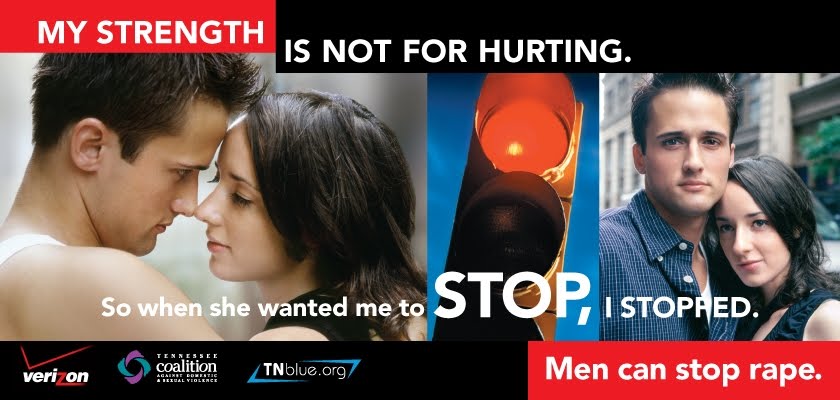
Feminists know, that at the end of the day, efforts to protect women from abuse ultimately lay in the hands of the men who choose to abuse, rape, assault or beat women. No amount of telling a woman to dress differently, avoid certain places or at certain times is going to prevent a woman from being the target of an abuser. Currently the stats stand at 1 in 3 American women experience some form of physical abuse in their lifetime and 1 in 4 experience rape.

More and more, the focus is turning away from women attempting to sheild themselves from the advances of or to avoid men who would exploit or abuse, as people realize that its not effective, its not realistic and its not fair to women. Instead campaigns are popping up targeting men which emphasize their responsibility to control their actions and behaviors and to be good examples for other men in their lives.

This post is a compilation of some of those media campaigns.

The following are from the organization Men Can Stop Rape (www.mencanstoprape.org).


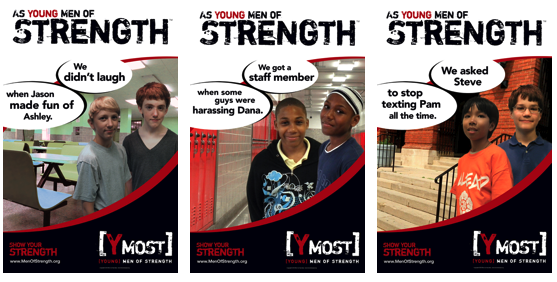
Young Men of Strength Campaign

Campaigns such as these can be talking points in conversations with young men in church settings, especially the Young Men of Strength campaign (YMOST). Materials such as these can supplement statements by church leaders denoucing abuse and violence towards women. Mormon specific materials would be an important addition, especially to combat cultural sayings such as Modest is Hottest or anonymous modesty letters.

Other organizations framing domestic violence, and sexual assault as men’s issues include: MenWorks, Inc., Men Stopping Violence, The Good Men Project, A Call to Men and The National Organization for Men Against Sexism. Earlier this month, a number of organizations came together to host the Healthy Masculinity Summit.

These efforts all share the goal of transforming rape culture in Western civilization. While targeting men directly through campaigns such as those highlighted here, many of these organizations also emphasize the importance of media literacy and call for media to reduce content that normalizing sexism, disrespect and violence against women.

Call to Action: Please share these campaigns and organizations with men that you know and start conversations with them about addressing the role that men have in stopping violence against women. If you are feeling especially creative, please design some Mormon directed PSAs for the men of the church and share them here. 

Call to Action: Start Podcasting

The Mormon feminist community has been greatly blessed this last year by the podcast Daughters of Mormonism where we were able to hear from many Mormon women’s voices and participate in discussions on topics pertinent to  women of the church today. Sybil, the creator of Daughters of Mormonism, just recently announced that she will be unable to carry the podcast forward. In her farewell episode, she passes the torch to us, LDS women with experiences and thoughts that need to be expressed and heard. Sybil says, “There is so, so much still to be spoken. I want to hear your voices. I want to hear your stories. And there is more out there than I could ever cover. I’ve known this time was coming, and now it’s finally here.”

Sybil has issued the call, and now, by extension WAVE is issuing the call to Mormon women to start podcasting. For those who are new to podcasting and do not know where to start, Sybil has compiled a list of resources and created a tutorial on how to get started from your own home.

Feminist Mormon Housewives have already answered Sybil’s call by starting the fMh Podcast. They are off to an amazing start and featured an interview with WAVE board members in Episode 11.

The Roundtable of Mormon women’s voices at Patheos is another place to find recordings discussing topics pertinent to church culture .

Mormon Stories have featured Mormon women like Carol Lynn Pearson, Claudia Bushman and our very own Tresa Edmunds.

Mormon Matters frequently features LDS women in their episodes on a variety of current events and historical topics pertinent to Mormonism.

We at WAVE are looking forward to your stories and thoughts.

With podcasting, you can post episodes as frequently as your life can allow–if its once a week, once a month or even sporadically. Once your first episode is up, please place your link in the comments of this post so we can have a respository of podcasting LDS Women’s voices.  Vlogging (video recordings of your thoughts and stories) is also welcome and encouraged.

We look forward to hearing and sharing your stories!